
Finding Clay Residents Through Records
A Clay residents directory search begins with the right record. Keep the name or address in hand first. County property records link an address to a parcel. The state voter service can confirm one person's election record. Library directories help when a household lived here years ago. Match two facts where you can. Use a name plus a postal city, or a parcel plus an old street number. That habit pays off in Clay. A Town of Clay address can carry more than one delivery-city label. Anyone trying to find who lives on a street in Clay needs every anchor available.
- Search the county property roll by address or owner name and save the tax-map number, situs address, owner spelling, and assessment year.
- Open the state voter lookup only for a known person, using the required name, county, and date-of-birth information.
- Use the parcel’s legal description and owner spelling in the County Clerk deed index to identify recorded transfers.
- For a past household, compare annual directories, telephone books, newspapers, and released census material at the library.
- When a needed town record is not online, ask its custodian for a narrow record, date range, and format under FOIL.
Note: A match is far more dependable when two independent records agree on the person, the location, and the relevant date.
Clay Resident Records Offices
Clay residents appear in records kept by several custodians. The Clay County Clerk holds deeds, mortgages, and selected court custody, while county real-property systems maintain the tax-map and assessment infrastructure. Voter-registration questions go through the elections route. The Clay Town Clerk keeps town minutes, local licenses, forms, and the town's FOIL process. Ask the right Clay office first. Treating one narrow index as a complete resident directory is the fastest way to a wrong answer.
Onondaga County Clerk
401 Montgomery Street, Room 200
Syracuse, NY 13202
315-435-2227
Onondaga Board of Elections
1000 Erie Boulevard West
Syracuse, NY 13204
315-435-3312
The County Clerk public counter welcomes visitors on weekdays from 8:30 to 4:00. RPTS sits at 421 Montgomery Street in Syracuse and handles county tax-map and bill questions. The Clay assessor takes local roll and grievance matters. Town Clerk, county, and Sheriff requests are separate targets under New York's Freedom of Information Law, so name the specific agency and record rather than sending a broad people search request to one of them.
Clay Parcel Searches by Address
Address work in Clay turns on the difference between a situs and a mailing address. The situs is where the parcel physically sits. The mailing address receives tax correspondence and can fall outside the Town. County systems help because they preserve both fields where available. They also supply a tax-map number. This number bridges a street address to the map and the land-record chain.
| Clay county search mode | Input | What it identifies | Important limit |
|---|---|---|---|
| Clay Tax Map Number | Clay parcel identifier | Clay mapped parcel and legal-record bridge | Not a Clay household identifier |
| Clay Owner Name | Name as shown on Clay deed | Clay property association | Clay owner may not occupy the parcel |
| Clay Property Address | Clay street number and name | Clay physical situs location | Clay postal-city variants can affect a search |
| Clay Mailing Address | Clay tax-notice address | Clay correspondence destination | Does not prove Clay residence |
The older official Image Mate gateway documents four search modes, and Beacon layers in property details, prior sales, dimensions, and assessment values. The county GIS viewer can then locate the parcel, show layers at the needed zoom, measure, and export a dated PDF. Check the property class, roll year, and legal description before tying a name to a Clay residents directory result.
- Parcel
- A defined piece of land represented by a tax-map number.
- Situs address
- The physical address of a parcel, not necessarily the address for tax mail.
- Index
- A finding tool that points to a record; it is not always the record image itself.
- Criss-cross directory
- An address-oriented directory arrangement, when a volume includes one.
Clay Voter Lookup Fields and Limits
New York's voter registration look-up is an election service, not a general Clay residents directory. Its form asks for County, Last Name, First Name, and Date of Birth. ZIP Code appears as a narrowing field. A valid result can return registration, poll-site, and mail-ballot details for the voter being checked. Browsing an entire Clay street or ZIP for names is not something it does. The official New York voter lookup displays the person-search fields the state requires.
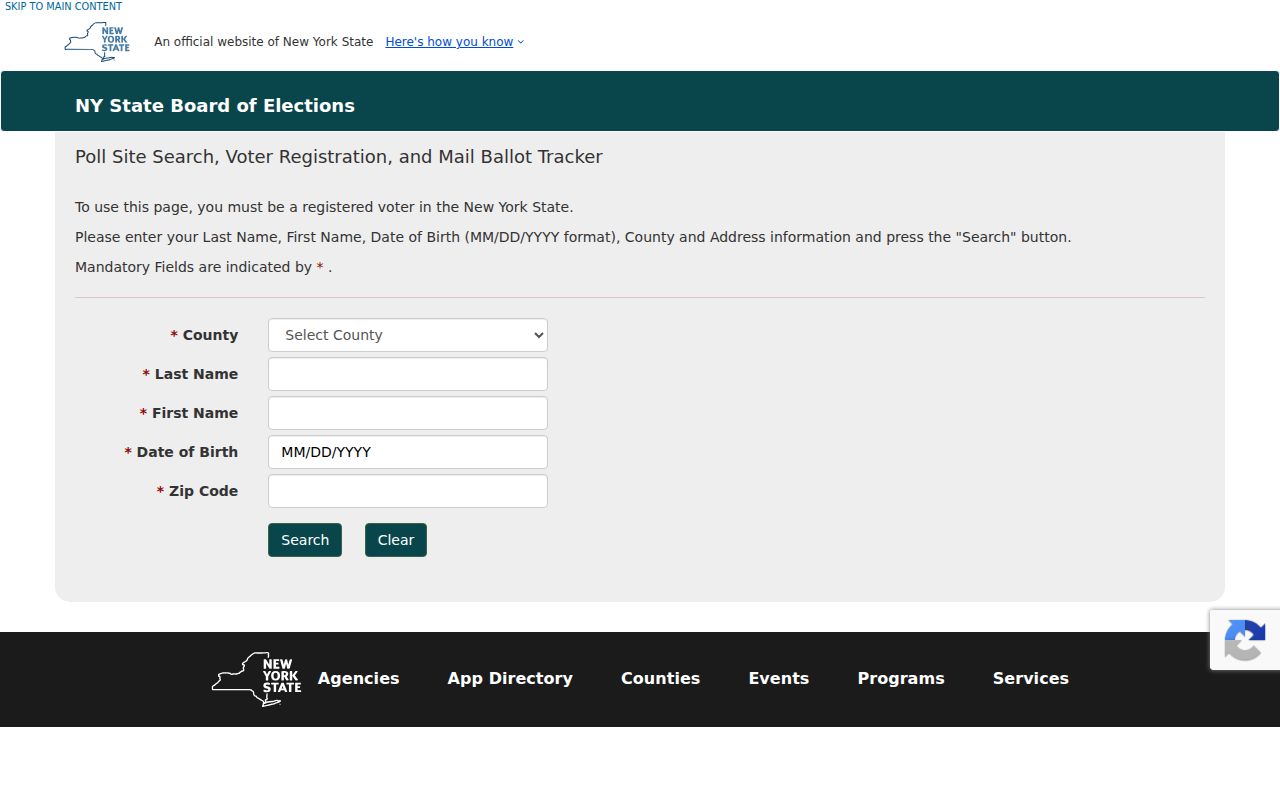
Retain the search date and confirm any name with a second, independent source. Election Law §3-220 opens registration records to the public under Board supervision. SSN, driver-license, and non-driver-ID data stay withheld. Protected voters and Address Confidentiality Program participants may lack an ordinary residence address. A state voter-file request carries an elections-purpose restriction. It cannot replace a public street list.
Note: A voter result confirms election-system information at a point in time. It does not confirm ownership or uninterrupted occupancy.
Clay Current Resident Directory Sources
Current Clay resident searches work best when each source does its own job. The assessment roll ties a parcel to an owner association. The voter service answers a registration question for one known person. The recorded-document index names parties to a legal transaction. Town staff listings identify public officials, not townwide residents. Keeping those records distinct helps. So no single source carries more weight than it should.
| Clay source | Best use | Custodian | Access channel |
|---|---|---|---|
| Clay assessment and tax roll | Clay parcel, owner, situs, and tax-mailing details | Clay assessor / county RPTS | Clay Beacon, Image Mate, counter, or phone |
| Clay GIS parcel viewer | Clay parcel position, nearby lots, and map context | Onondaga County GIS | Clay online viewer and PDF export |
| Clay recorded land index | Clay grantors, grantees, and document dates | Onondaga County Clerk | Clay Cott guest index, account images, counter |
| Clay voter registration lookup | One person’s Clay registration and poll information | NY State Board of Elections | Clay online form or elections office |
| Clay Town forms and minutes | Clay local action, permit, or meeting context | Clay Town Clerk | Clay Town pages, clerk contact, or FOIL |
Official Clay records state their custodian, coverage, and access rules. A paid compiled people-data service may blend stale or mismatched sources and leave the reader unable to check a result. The gap matters when a name is common or a Clay postal label changes.
| Clay research source | What supports a match | How to correct an error |
|---|---|---|
| Official parcel, deed, court, voter, or library record | Named custodian, record date, and defined field set | Ask the original Clay or state custodian |
| Paid compiled people data | Unspecified mix of source data and update dates | Check the original Clay record before relying on it |
A current owner of record in Clay may be a trust, an estate, a business, or a person whose mailing address sits somewhere else entirely. Treat a single hit as a lead. Confirm it against a dated voter roll, court file, business filing, or library record before assuming a whole household from one name. For work that starts with a named road and its parcels, the address-by-address workflow lives on the Clay street directory page.
Clay Deed Indexes and Owner Trails
Onondaga County land records reach back to 1794. The Cott eSearch portal lets guests view the deed index for free. Images and printing call for an account or subscription. The Clerk posts subscription rates of $5 for 24 hours, $100 for 30 days, and $500 for 180 days, with printed pages at $0.65 each. Not every indexed item carries an image. Confidential divorce images stay out of public view. Save the instrument or book-and-page reference along with the party name. That pairing is what makes a deed traceable later.
A deed itself names the grantor and grantee. It carries the legal description and recording details, and sometimes shows transfer-tax marks. Begin with the current owner's purchase. Then search that seller as an earlier grantee to step back another generation. A mortgage or its satisfaction can time a financing event, but neither proves a sale happened. For older names dated before August 21, 2017, search the portion after "MC" using a Contains query. The index may separate it with a space or an underscore.
The Clerk offers a free PropertyCheck service that emails a name-based alert whenever a new document is recorded. It exists for deed-fraud awareness, not for matching residents. When a portal stops at an older entry, ask the Clerk about deed books, microfilm, office terminals, or archival retrieval. A missing image does not mean the record never existed.
Note: Keep the Clay parcel description attached to every deed result, especially when one surname threads through several county transactions.
Clay FOIL Requests When Online Ends
Not every Clay record has a public search screen. The Town's permit, inspection, and zoning materials lay out forms and procedures. But the Town publishes no official online index of results by address. FOIL fills that gap. A focused request should name the address and the tax-map number. It should also give a date range, the record type, and whether you want electronic or paper delivery. Route it through the Town Clerk. Code Enforcement may hold the underlying permit or inspection file. Ask for existing records only. An agency will not build a new research product on request. The Town Clerk forms and permits information page carries the FOIL request route. These focused requests use it.
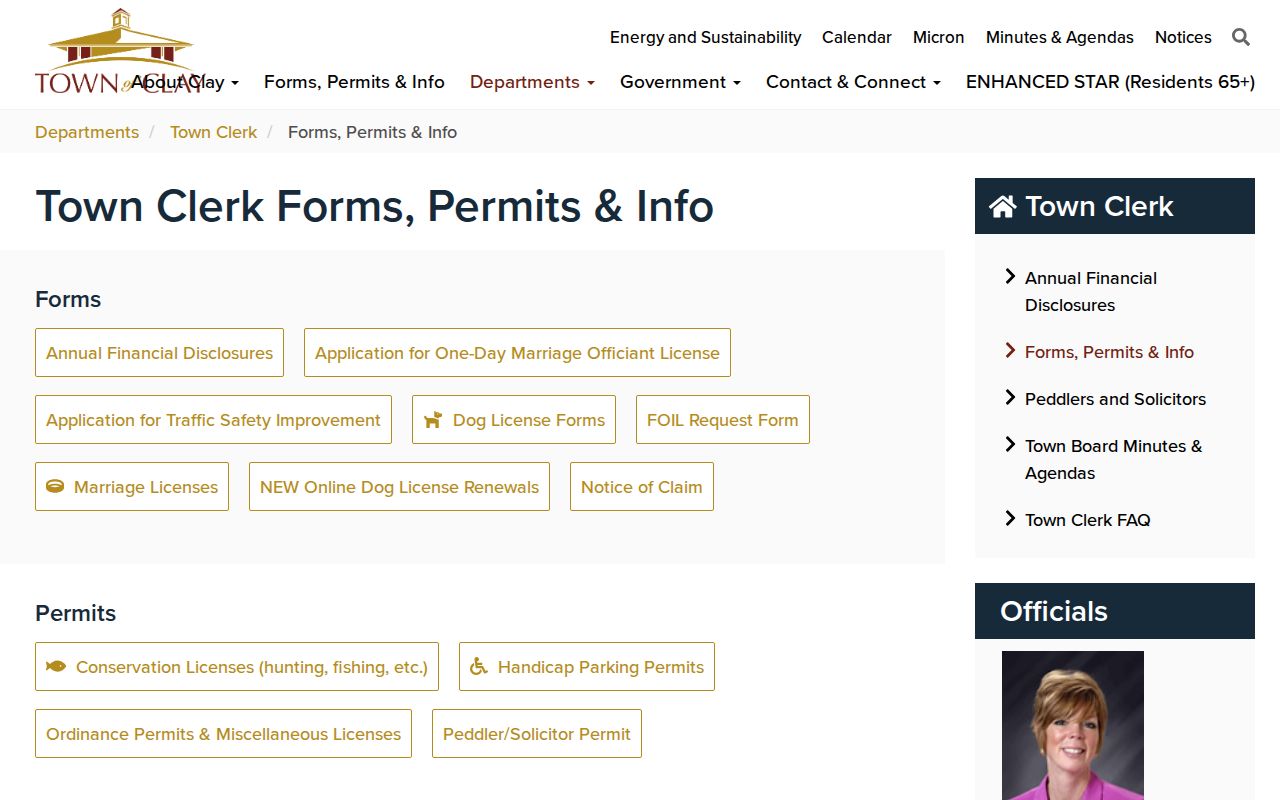
New York FOIL sits in Public Officers Law Article 6 §§84-90. The clock is short. An agency must grant, deny, or acknowledge a written request within five business days. When more time is needed, it has to give an approximate date for the answer. Copies run $0.25 per page up to 9 by 14 inches. Separate rules apply to oversized or electronic production. File each agency's response alongside the record request itself.
Clay Custody and Registry Searches
Custody and registry tools are narrow public-record sources. The Onondaga Justice Center roster lists people currently held at that facility. It shifts constantly. It is not a verdict. The state sex-offender registry carries its own legal notice. Its online search reaches only Level 2 and Level 3 records. Use either tool for a lawful safety or records purpose. Never treat an entry as a full history. Never treat it as confirmation of where someone lives now. The Onondaga County Sheriff lookup is the official route to the Justice Center roster.
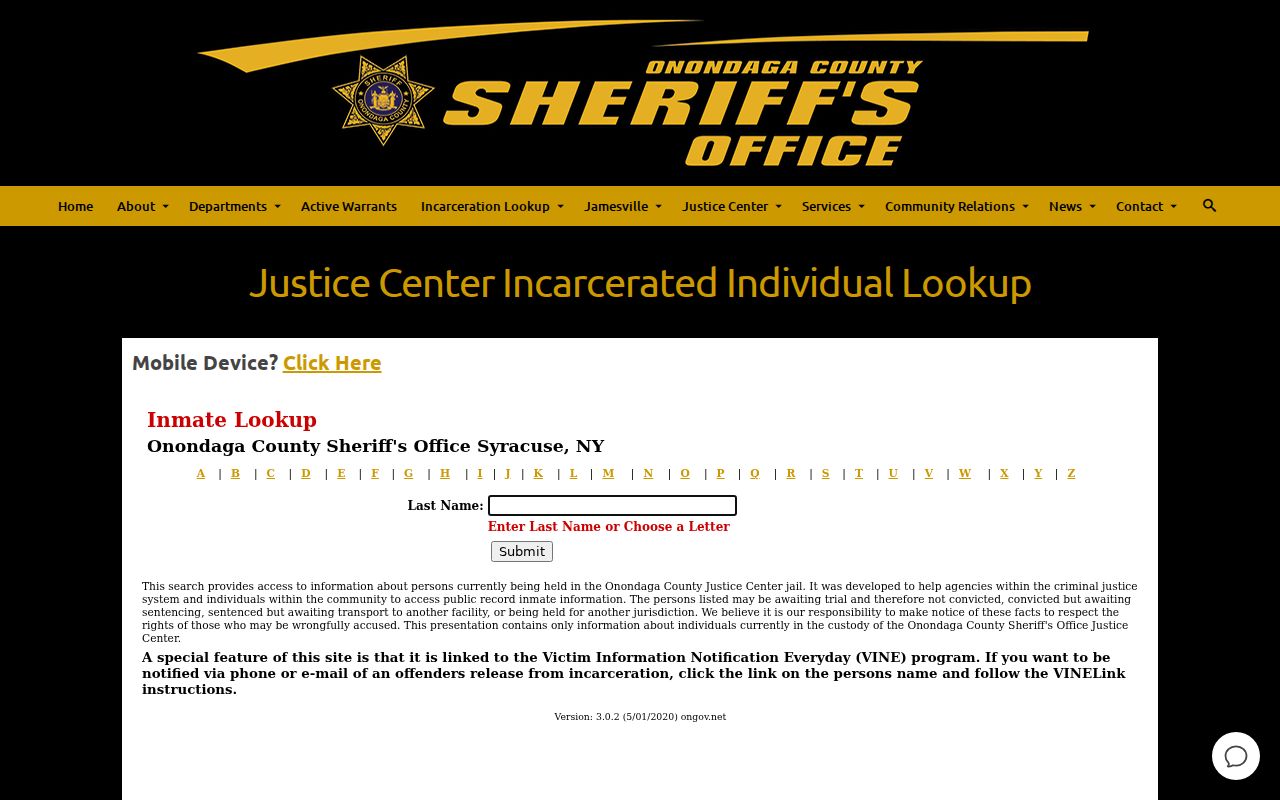
The roster's published fields may include a name, age, court, next court date, charge sequence. Bond information and facility placement may also appear. Those fields describe custody status, nothing more. For a past court matter, go to the particular court or the NYS eCourts system and keep the docket number and date. Lean on that rather than a roster screen. The New York sex-offender registry search displays its permitted search modes and its cautionary notice.
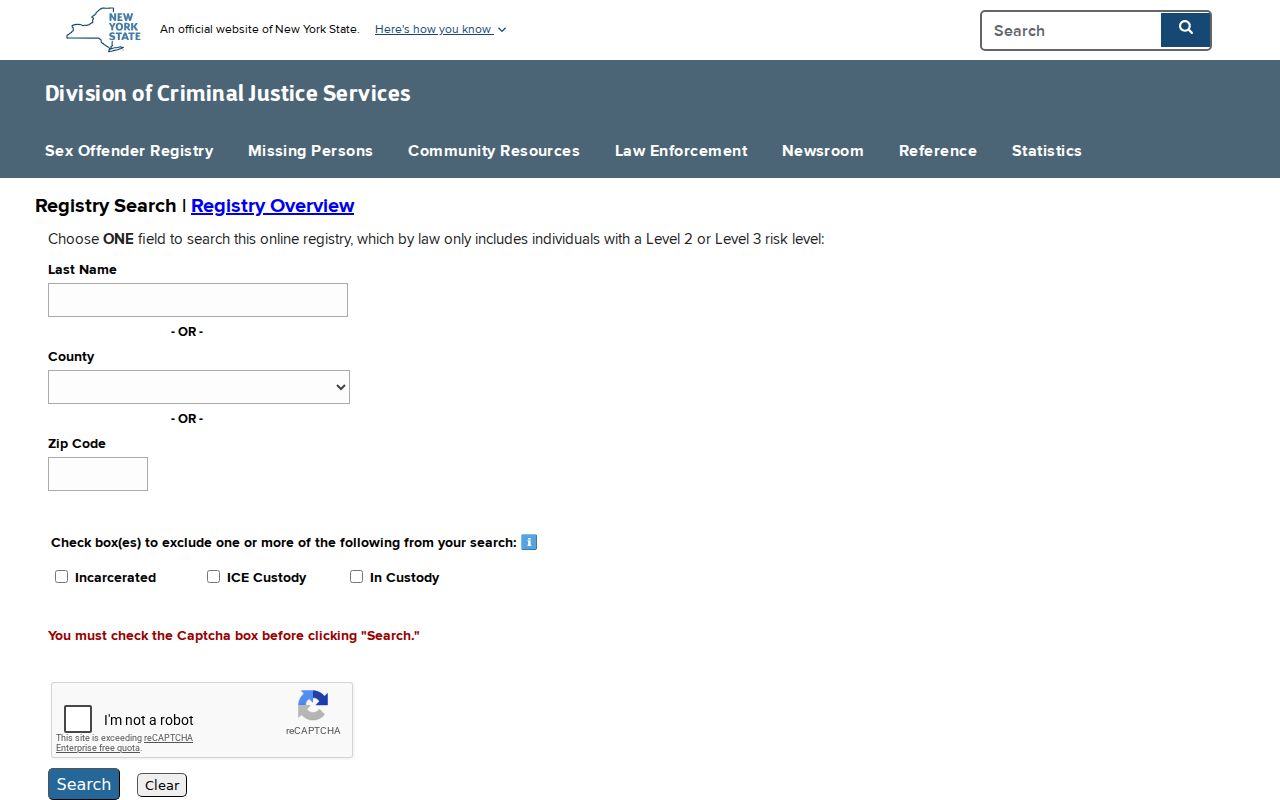
Level 1 information stays available by telephone under the registry's stated procedure. The public web search covers only Level 2 and Level 3 records. A registry result never authorizes harassment, contact, or the publication of sensitive information.
Clay Historical Resident Directories
The best starting shelf for a historic Clay household sits in the Local History & Genealogy room of the Onondaga County Public Libraries. It is on the Central Library's third floor. Syracuse and suburban directories run in print from 1936 to the present. Earlier city directories sit on microfilm from 1862 to 1935. Some 1844-1862 microfiche sits there as well. Telephone directories go back to 1894. Newspapers run from 1850 to near the present. The room also keeps county census materials, cemetery cards, and an obituary index covering about 1860-1996. City directories through 1923, the library reports, have digitized FamilySearch access, though accounts may be required. Read each entry with its year and street page in mind. An entry can carry an address, an occupation, an employer, a spouse notation, or an owner/renter mark. It does not automatically prove ownership. Full holdings and the household-tracing method stay on the Clay city directory page.
When a name fails to appear, work the geography instead. Try the postal city, the street name, Euclid, Gifford, Morgan Road, Pine Plains, or Hamlin Marsh. Clay records may be filed in Syracuse and refer to the Town. They may use Liverpool, Brewerton, or North Syracuse as a delivery city. That three-part geography explains many missing keyword searches.
Note: Pair historical directory and newspaper leads with the record date, volume, and page. Add an independent source.
Clay Pine Plains Resident Trail
Pine Plains Cemetery earns its place in Clay family research. The Town historian traces burials there to Peter Young, interred on April 9, 1812. The cemetery incorporated in 1886, and the town took title in 1887. The grounds later grew to about 70 acres. A 2012 account by the historian counted 787 veterans. Those figures are history, not a current interment count or an online resident register.
The cemetery publishes no online interment lookup. Start instead with the library's county, town, and name cemetery-card resources. Then contact the cemetery office through the Town when a particular burial needs confirmation. Search newspapers and family files for both Pine Plains and Old Town Cemetery. An obituary citation, a grave record, and a probate file can then form one thread. A directory address can complete the dated chain. Never assume a surviving relative still lives at an old directory address.
Note: Clay cemetery history offers place and date clues, but confirm any burial with an office or archive.
Clay Land Records Go Digital
The County Clerk's 2024 annual report measures the record stream behind any Clay parcel search. The office reported 11,241 deeds processed in 2024. Mortgages totaled 10,791. Satisfactions exceeded 11,000. Index numbers reached 10,284, and judgments 7,254. The office also entered 275,003 land-record pages into a digital database. That volume improves access, but it does not mean every older image or handwritten book is online.
The County Clerk's 2024 annual report supplies the underlying digitization figures. Use the online index as the first stop. Preserve the instrument number, legal description, and date for a counter or terminal follow-up. County land records can reach back to 1794. The clerk publishes no precise online image cutoff. A Clay residents directory search should therefore label a result "not found online," never "no record," until the custodian confirms the series searched.
Clay Resident Privacy Boundaries
Public access has hard limits. New York's Address Confidentiality Program rests on Executive Law §108. It gives qualifying participants a substitute mailing address and forwarding service. A protected voter designation separately hides a voter's actual residence from ordinary display, and DMV personal information sits behind the federal Driver's Privacy Protection Act plus New York procedures. Never reverse a protected address with stray clues.
Date every Clay source. Direct each correction to the custodian who holds that record: the Clay assessor or RPTS for property data, the Clay Clerk for a recorded instrument, the Clay elections office for voter records, and the Clay court for a court index. Leave full birth dates, protected addresses, SSNs, phone numbers, and household-member guesses out of any research note. A public record is evidence with a defined purpose. It is not permission to publish an unverified profile. The privacy program has an official route too. New York's Address Confidentiality Program provides the official contact and application information.