
Clay City Directory Collections
Clay does not have a separately identified, complete municipal run. Instead, the practical historical shelf is the Syracuse and suburban material at Onondaga County Public Libraries Local History & Genealogy. Those volumes catch Clay families through the wider Syracuse area, employer references, suburb labels, and postal-city variants. Search Clay, Liverpool, Brewerton, North Syracuse, and the street name when a person is absent under one place label. A directory records what was printed for that year, not a lasting claim about a household.
| Collection | Years | Where Held | Access |
|---|---|---|---|
| Syracuse and suburban city directories | 1936 to present | OCPL Local History & Genealogy | Print collection |
| Earlier city directories | 1862 to 1935 | Central Library | Microfilm |
| Early directory fragments | Some 1844 to 1862 | Central Library | Microfiche |
| Digitized directory pages | Through 1923 | FamilySearch-linked scans | Search or browse; account access may vary |
| Syracuse-area telephone directories | 1894 to present | OCPL holdings | Microfilm and print |
The library also holds an obituary index for local Syracuse newspapers from about 1860 to 1996, newspapers from 1850 to within three months of the present with exceptions, federal census material, county census microfilm, and cemetery cards. Later obituary material should be requested through a librarian rather than assumed to be in the printed index. Note: A city directory gives a dated local listing, not proof of ownership or a present-day address.
Clay Directory Shelves at OCPL
The Local History & Genealogy room is on the third floor of the Central Library, 447 South Salina Street in Syracuse. It lists Monday, Thursday, Friday, and Saturday hours of 9:00 to 4:45, Tuesday and Wednesday hours of 9:00 to 7:15, and Sunday closure. A valid OCPL card is expected, and a nonresident can obtain one at the welcome desk. The research route is useful when a Clay surname appears under a neighboring postal city or a household moved within the broader Syracuse area.
Use the library’s additional sources listing to confirm the directory, telephone-book, obituary, newspaper, census, and vertical-file holdings before visiting. A remote researcher can also use the library’s query procedure for a city-directory search, obituary citation, cemetery-card lookup, or newspaper reference. Give the full name, approximate date, place, known relatives, and every spelling variant. The research fee is not stated in the sources, so ask for a current quote first.
A directory search becomes more reliable when the search note preserves the printed year, page, city label, and street. That makes it possible to compare a Clay listing with a census, a cemetery card, or a deed later without blending evidence from different years.
See the OCPL Local History & Genealogy room before arranging a visit.
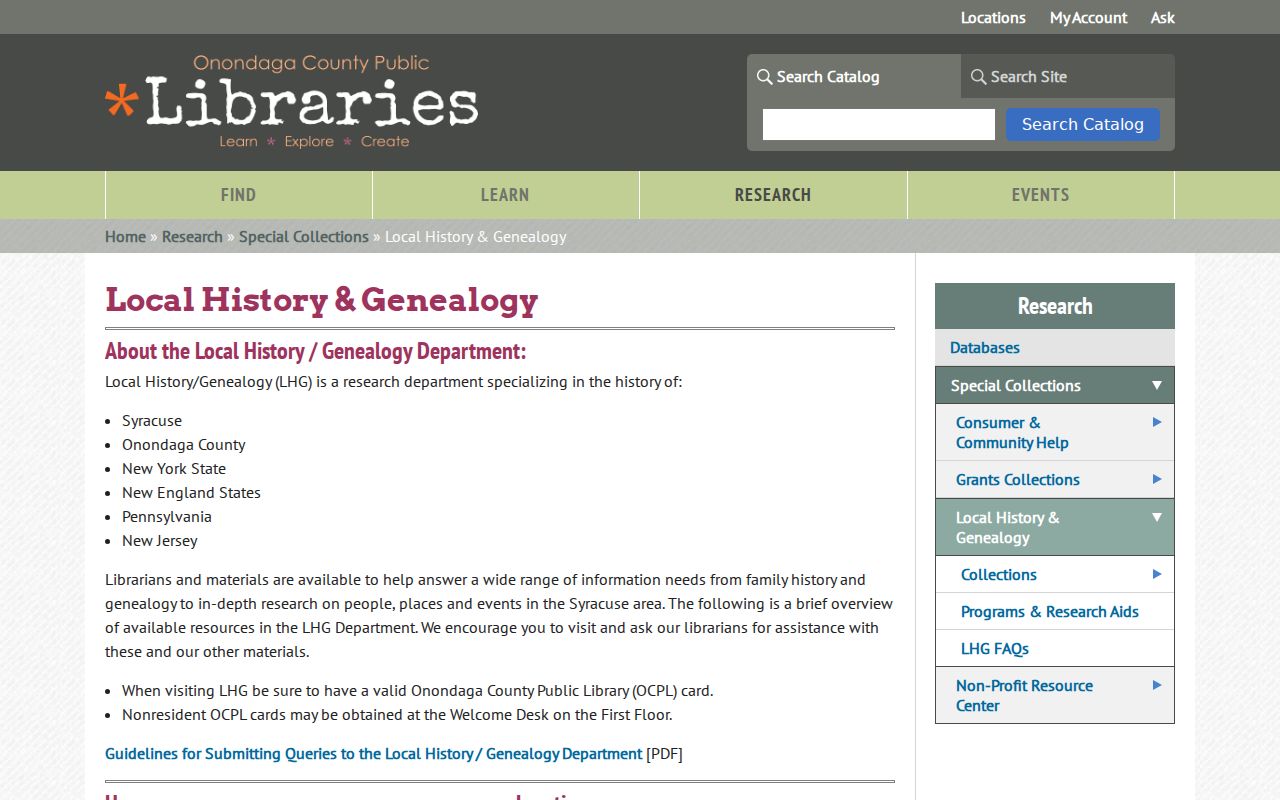
The room is the central physical route for the regional directory runs that can surface a Clay household under several city labels.
Clay City Directories Online
OCPL reports that city directories through 1923 have been digitized through FamilySearch. The separate New York Land Records collection can complement a directory match with deed, mortgage, date, and legal-description research, although its access and image rights can vary. County-clerk originals remain the underlying record for a land filing. For a Clay family, the directory is usually the household lead, while a land record tests a possible ownership connection.
The Onondaga histories and directories collection adds Hamilton Child’s 1868–69 gazetteer and business directory and W. M. Beauchamp’s 1913 Syracuse history. Those works supply regional context, business names, local offices, and nearby place names. They are not a complete Clay resident list, so an absent name is not a negative finding.
Search page images as well as typed names. Old initials, hyphens, and worn pages can defeat a precise query. A street, employer reference, or spouse notation can provide a second path into the Clay city directory material.
Browse the directory and telephone holdings for the source behind this collection image.
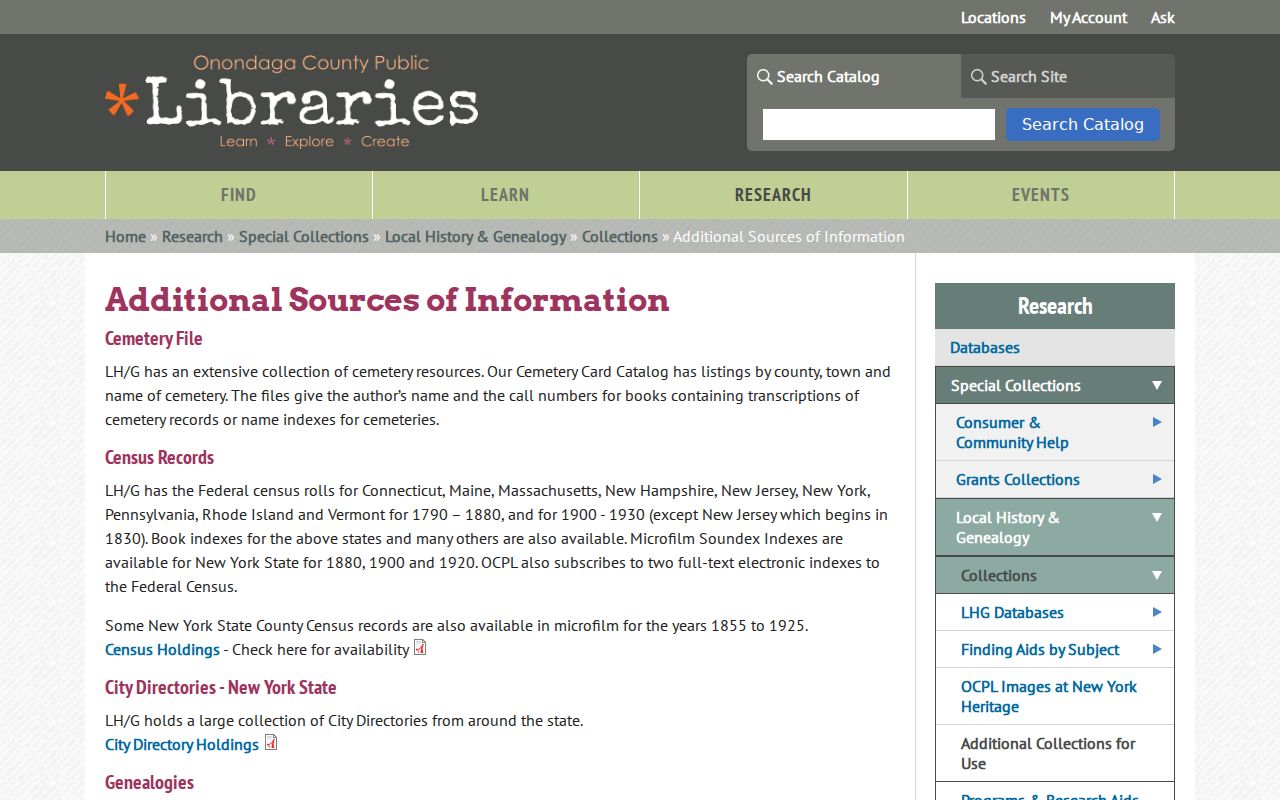
Telephone books can supply an address lead, but they do not establish that a person currently lives at that address.
Reading a Clay City Directory Entry
Transcribe what the volume actually prints. The library identifies the holdings, but no reusable Clay sample entry or publisher abbreviation key was captured in the research. A careful transcription still records the surname, given name, spouse in parentheses when printed, street address, any published occupation or employer, widow notation, and the volume’s abbreviations. Do not expand initials or infer a relationship from a symbol without reading that year’s key.
| Name | Copy the spelling, initials, suffixes, and name variants exactly as printed. |
|---|---|
| Household clue | Note a spouse in parentheses or a widow notation only when the entry shows it. |
| Address | Record the house number, street, postal-city label, year, and page. |
| Published activity | Keep any occupation or employer wording as a dated lead, not a current identity claim. |
| Street page | Use the street page when the name index does not produce a dependable hit. |
- Criss-cross directory
- An address-oriented portion of a directory, when a volume includes one, used to inspect a street or house number.
- Householder index
- A name listing organized around the person or household shown by the publisher, rather than a complete list of everyone at an address.
- Abbreviation key
- The volume’s explanation of shortened words and symbols; photograph or copy it before interpreting an entry.
Not every OCPL volume is documented as having a Clay reverse-directory section. When no address index is present, examine the street-name pages and pair the number with the correct annual volume.
Clay Directory Names from Euclid
Historic place names can rescue a Clay search that fails under the modern postal city. Euclid’s post office was established in 1827 at Gifford Store near Morgan Road and Route 31. Andrew Johnson was its first postmaster and the first Clay supervisor. Search Euclid, Morgan Road, Gifford, and former business terms in directory pages, newspapers, and family files when a modern Clay or Liverpool search is empty.
The Town’s history also places early record activity in a landscape shaped by the 1827 separation from Cicero. That is a reason to preserve the place name and printed year with every directory hit. It is not a reason to assume that a modern street number or postal city was used in the earlier record.
Note: Place-name variants are search aids, and they should be checked against the actual entry, street, and record date.
Tracing Clay City Directory Households
A household trail works best as a sequence of dated checks. Annual or near-annual directories can fill the gaps between federal census releases, while the census adds ages, birthplace, and household composition. A Clay directory entry can also point to a street page, newspaper notice, cemetery card, or probate lead. Treat each source as a different kind of evidence, especially where a property owner and a listed occupant are not the same person.
- Write the person’s full name, initials, alternate surnames, known street, and a starting year near the expected move.
- Find the first available Clay-area listing and copy its exact address, household clue, published activity, year, and page.
- Check the prior and next available directory years, including the street page if the name index fails.
- Pair the directory period with the released federal census and the 1855–1925 New York county census holdings at OCPL.
- When the listing stops, use the obituary index, newspaper notice, cemetery cards, or Surrogate’s Court as the next dated lead.
A disappearance may reflect a move, death, changed name, missing volume, or a different postal label. It does not settle the reason by itself. When a directory lead needs a current court, property, or voter check, use a Clay resident lookup to keep the newer record separate from the historical listing.
Clay Directory Research During OHA Closure
The CNY History and Onondaga Historical Association collections hold more than a million items dating from 1863, including directories, maps, photographs, newspapers, clipping files, family files, census material, naturalization records, cemetery records, vital material, and ephemera. These collections can add context to a Clay directory name, road, business, or cemetery reference. The historic regional guide describes closed stacks and on-site research rules.
Its current home page says the Research Center is temporarily closed and expected to reopen in fall 2026. Use OCPL and online collections first, search the catalog, and verify the reopening status before making an in-person trip. The closure changes the immediate access route, not the value of the collection.
Open the CNY History research collection for the source of this research-center image.
Catalog and online planning are especially useful while the physical research center is unavailable to walk-in researchers.
Clay Directory Trails to Pine Plains
Pine Plains, also called Old Town Cemetery in historical material, supplies a strong endpoint for a Clay family trail. The Town Historian’s Pine Plains account records the first burial as Peter Young on April 9, 1812, incorporation in 1886, and town title in 1887. It later grew to about 70 acres. The historian’s 2012 account counted 787 veterans, a historical count rather than a current database total.
No official online Pine Plains interment lookup was located. Use the town resource for cemetery contact, the OCPL cemetery cards by county, town, and name, and the obituary or newspaper holdings for a date and relative connection. A printed directory address, an obituary date, and a cemetery card can form a useful three-part sequence for a Clay family, but each needs its own date and citation. Search both Pine Plains and Old Town Cemetery in a Clay directory research note, keeping the year and source citation.